Vallejo's overall housing market cooled through the first half of 2026. Citywide, homes sold for a median of $515,000 over the three months ending in May 2026, down 2.4 percent from the same stretch a year earlier, with the typical home taking about 35 days to sell. That is a market catching its breath, not a market in trouble.
Walk into the Architectural Heritage District, the hillside grid of Victorians and Craftsman bungalows just east of downtown that most longtime residents still call Vallejo Old City, and the most recently published district-level numbers tell a different story. As of November 2025, the district's median sale price was $495,000, down 11.6 percent year over year. Over that same period, price per square foot in the district rose to $268, up 31.4 percent from the year before.
A neighborhood cannot have a falling median price and a rising price per square foot unless something about the mix of homes, or the buyers chasing them, changed shape. In Vallejo Old City, both did. And the shift has less to do with wallpaper and wainscoting than with a state tax law that quietly changes what it costs to own one of these houses every year after closing.
Two Numbers, One Contradiction
The simplest read of the divergence is compositional. If smaller, more modest cottages sold at a premium relative to their square footage while a few larger, higher-priced Victorians sat or sold below expectation, the median would fall even as the per-foot number climbed. That is plausible, and it is probably part of the answer.
It is not the whole answer. A buyer choosing between a 1,400-square-foot bungalow in Vallejo Old City and a similarly sized newer home elsewhere in Solano County is not just weighing square footage and curb appeal. If the older home qualifies for a specific state program, the buyer is also weighing a very different long-term tax bill, one that does not move the way a typical property tax bill moves. That difference changes what a rational buyer is willing to pay per square foot for the older house, independent of how the broader city's median price is behaving that quarter.
What the Mills Act Actually Changes
California's Mills Act program was enacted in 1972 and lets cities and counties enter into contracts with owners of qualified historic properties. In exchange for a commitment to maintain and, where needed, restore the property's historic character, the county assessor switches how the home is valued. Instead of the standard market approach, which ties assessed value to comparable sales, a Mills Act property is assessed using an income approach. The assessor estimates what the home could reasonably rent for, subtracts expenses, and capitalizes that net income into a value. For an owner-occupied home, that comparable rent figure often lands well below what the home would fetch on the open market, which means a lower assessed value and a lower annual tax bill.
To see how much that can move the number, consider a simplified illustration used in California tax preparation guides, not a specific Vallejo transaction. A home with a $500,000 market value would typically carry a tax bill near $6,000 a year. Under a Mills Act assessment, using comparable rents to establish an income-based value, that same home's bill can drop to roughly $2,075 in the first year, a monthly savings north of $300. The exact numbers depend on local rents, expenses, and the capitalization rate the assessor applies, and they reset annually, but the mechanism itself is not a rounding error.
| Standard market-value assessment | Mills Act income-approach assessment | |
|---|---|---|
| Basis for value | Comparable sales | Comparable rents, minus expenses, capitalized |
| Typical trajectory | Rises with market appreciation | Reset annually, can rise or fall with rental comparables |
| Contract required | No | Yes, minimum 10-year term with the city |
| Binds future owners | No | Yes |
A study by San Diego's historic preservation community looking at homes there under Mills Act contracts found tax savings ranging from roughly 40 to 80 percent, averaging around 49 percent, and a price premium of about 16 percent for Mills Act designated homes compared to similar houses without the designation. That is a different city, and Vallejo's own savings will vary by street and rental comparables, but it is the clearest available evidence that the tax structure itself gets priced into what buyers are willing to pay.
Which Vallejo Homes Actually Qualify
Not every pre-war home in Vallejo is eligible. A property qualifies if it is designated as a city landmark, is a contributing resource within a recognized historic district, or is listed on the National Register of Historic Places or the California Register of Historic Resources.
Vallejo has three districts listed in the National Register: the Saint Vincent's Hill Historic District, the Architectural Heritage District, and the Mare Island Historic Core. The city also maintains 82 individually designated landmarks, federal and local, spread across neighborhoods that never became formal districts.
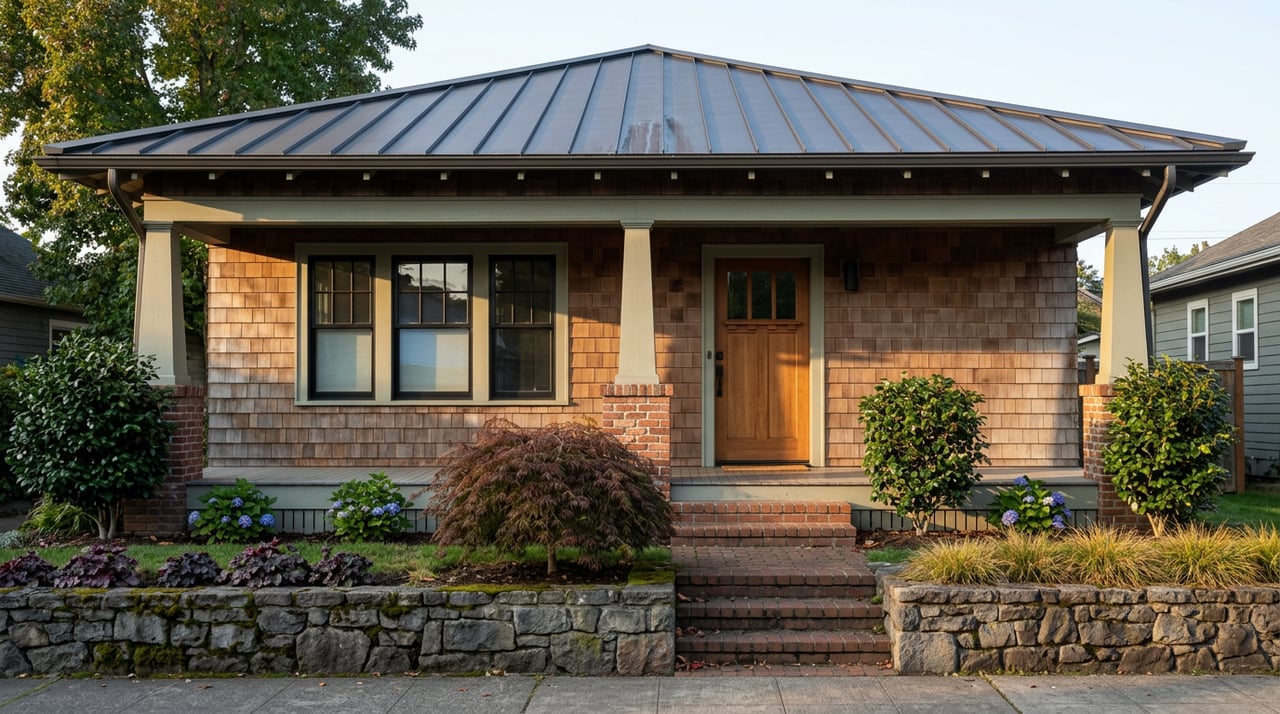
The two residential districts read differently on the ground. The Architectural Heritage District was historically home to Vallejo's wealthier residents, including politicians, businessmen, and naval officers, and its housing stock ranges from Victorian-era homes to Craftsman bungalows. Its landmarks include the Heritage House, built by architect Julia Morgan, and several homes attributed to Vallejo's own William Jones. Saint Vincent's Hill sits south of downtown and west of the Heritage District, named for St. Vincent's Catholic Church, built in 1868 and still the oldest church in the city. It developed between 1870 and 1920 as Mare Island's naval shipyard drew workers to the area, and its homes are generally smaller and more modest than the Heritage District's.
One contributing property in the district's National Register nomination illustrates what "contributing resource" status actually looks like on paper. The Shingle-style Herbert House at 1 Kentucky Street was built in 1902 and moved to its current waterfront site in 1969 specifically to save it from demolition. That is the kind of detail a buyer discovers in the nomination documents, not on a listing sheet, and it matters because a home's contributing status, or lack of it, is what determines Mills Act eligibility in the first place.
The Friction Most Buyers Don't See Coming
Owning inside one of these districts comes with a review step that surprises a lot of first-time historic buyers. Exterior work on a landmark or contributing property, from window replacement to a new roofline, typically requires a Certificate of Appropriateness under Vallejo Municipal Code Section 16.614.09 before a building permit is issued. This is not a bureaucratic afterthought. It is the mechanism that keeps a district eligible for its National Register listing, and by extension keeps individual homes eligible for Mills Act contracts.
The contract itself has its own fine print. It runs for a minimum 10-year term with an automatic yearly extension, so in practice it rolls forward indefinitely unless either the owner or the city files a formal notice of nonrenewal. It binds successors, meaning if you buy a home already under a Mills Act contract, you inherit both the tax treatment and the maintenance obligations that came with it. That cuts both ways. A buyer who assumes an existing contract may step into real savings without applying for anything. A buyer who assumes the seller's marketed tax figure will simply continue should confirm that with the assessor rather than take it on faith, since the assessed value resets annually based on current rental comparables.
For sellers, the practical move is to find out before listing whether a property already carries a contract, or whether it would likely qualify for one. The city's Planning Division processes all applications and can confirm landmark or district status directly. A documented Mills Act eligibility, or an existing contract with a track record of savings, is a concrete number to put in front of a buyer rather than a vague appeal to charm.
A Few Questions Worth Asking Before You Write an Offer
Does a Mills Act contract transfer automatically when a historic home sells? Yes. The contract is binding on successors in interest, so a new owner steps into the same terms, obligations, and reassessment schedule the previous owner had.
Can I apply for Mills Act status after buying a historic home? Yes, ownership is not a prerequisite for eligibility, only the property's landmark or contributing status is. Applications go through the city's Planning Division.
Does the Mills Act cap what I can pay for a historic home? No. It changes the ongoing tax bill, not the purchase price. What it does is change the math a buyer runs before deciding what to offer, which is part of why per-square-foot pricing in these districts can move independently of the city's broader median.
If you are weighing a historic home in Vallejo Old City, Saint Vincent's Hill, or Mare Island, or you own one and are wondering what a Mills Act filing might actually be worth on your specific street, that is a conversation worth having before you list or write an offer. Joe Brasil works across Napa and Solano County with a particular focus on the character and historic housing stock in both, and can walk you through what your property specifically qualifies for. Get a free home valuation to start the conversation.